How Vehicle Aerodynamics Improve Fuel Efficiency
November 4, 2025
Sustainable Practices in Car Manufacturing: Driving Toward a Greener Future
November 4, 2025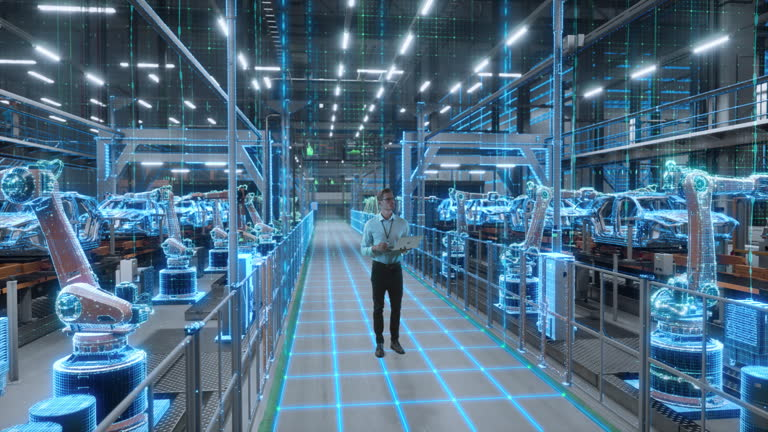
Introduction
The automotive industry is undergoing a massive digital transformation. One of the most innovative advancements leading this revolution is Digital Twin Technology. This cutting-edge concept allows manufacturers to create a virtual replica of a physical object, process, or system. In the context of vehicle factories, digital twins have become a game-changer—helping automakers enhance production efficiency, reduce costs, predict maintenance issues, and accelerate innovation.
Let’s explore what digital twin technology is, how it works in vehicle manufacturing, its advantages, real-world applications, and what the future holds for this groundbreaking technology.
What is Digital Twin Technology?
A digital twin is a virtual model that mirrors a real-world physical system. It collects real-time data from sensors, machines, and production lines, then uses that data to simulate and analyze how the system behaves. In simple terms, it’s like having a “living digital clone” of your factory.
In vehicle manufacturing, this means creating digital twins of:
- Production lines
- Individual machines or robots
- Entire vehicles
- Supply chain operations
With these digital replicas, engineers and factory managers can monitor, test, and optimize every aspect of production—without interrupting real-world operations.
How Digital Twin Technology Works in Vehicle Factories
The process starts with integrating Internet of Things (IoT) devices and sensors into the factory. These devices collect data such as temperature, speed, vibration, pressure, and energy usage from physical machines. The data is then transmitted to a cloud-based platform or specialized software that creates the digital model.
Here’s how it functions step-by-step:
- Data Collection: Sensors gather information from production lines, machines, and vehicles.
- Data Integration: The collected data is fed into simulation software to build an accurate digital model.
- Real-Time Monitoring: The digital twin mirrors the real-world system and updates continuously as changes happen.
- Simulation & Analysis: Engineers can run tests, predict failures, and simulate process improvements without physical disruption.
- Optimization: Insights from the digital twin help improve production, reduce downtime, and increase safety.
This constant flow of real-time feedback allows manufacturers to understand performance, spot inefficiencies, and make data-driven decisions instantly.
Applications of Digital Twin Technology in Vehicle Factories
Digital twin technology can be used in almost every stage of automotive production. Let’s break it down:
1. Vehicle Design and Development
Automakers use digital twins to simulate new car models, test designs, and check aerodynamic performance before creating physical prototypes. This reduces design errors and speeds up the innovation cycle.
2. Production Line Optimization
Factories can create digital twins of their assembly lines to identify bottlenecks or slow-performing machines. By testing different configurations in the digital environment, manufacturers can improve efficiency and reduce idle time.
3. Predictive Maintenance
One of the most valuable uses of digital twins is predictive maintenance. By analyzing sensor data, the system can predict when a machine is likely to fail or need servicing. This prevents costly breakdowns and keeps production running smoothly.
4. Quality Control
Digital twins help monitor quality parameters at every stage. Any variation in materials or machine performance is instantly detected, allowing for early corrections. This ensures that every vehicle meets strict quality standards.
5. Supply Chain and Logistics
The technology can also simulate supply chain operations. Manufacturers can predict material shortages, track shipments, and plan logistics efficiently—all using the virtual model.
6. Employee Training
Workers can train on digital versions of machines or assembly lines, reducing the risk of accidents and improving skill levels before handling real equipment.
Benefits of Using Digital Twin Technology in Vehicle Factories
The integration of digital twin technology brings a wide range of benefits to the automotive manufacturing sector:
| Benefit | Description |
| Reduced Production Costs | Virtual testing reduces the need for physical prototypes and rework. |
| Improved Efficiency | Real-time data helps identify inefficiencies and optimize workflows. |
| Predictive Maintenance | Prevents unplanned downtime through early fault detection. |
| Faster Time-to-Market | Speeds up design and testing phases for new vehicle models. |
| Enhanced Quality Control | Ensures consistent product quality across all production batches. |
| Sustainability | Helps reduce waste and energy consumption through smart resource management. |
By combining AI, IoT, and digital twin models, automakers can make smarter decisions faster, leading to leaner and more sustainable factories.
Examples of Automakers Using Digital Twin Technology
Leading global car manufacturers have already adopted digital twin technology to stay ahead in the competition:
- BMW uses digital twins to design and test assembly lines before they’re built, significantly reducing startup time.
- Tesla relies on digital twins for remote monitoring and software updates in both their cars and factories.
- Ford employs simulation tools to optimize factory layouts and reduce energy usage.
- Volkswagen integrates digital twins in its logistics and production management systems for improved coordination.
These examples highlight how the automotive sector is embracing digital transformation to improve performance and sustainability.
Challenges of Implementing Digital Twin Technology
Despite its many advantages, adopting digital twin technology is not without challenges. Some of the key barriers include:
- High Implementation Cost: Setting up IoT devices, cloud infrastructure, and software can be expensive.
- Data Security Risks: Large-scale data collection can increase cybersecurity threats if not managed properly.
- Integration Complexity: Combining data from multiple sources and systems can be technically challenging.
- Skill Gap: Employees need training to understand and manage digital twin platforms effectively.
Overcoming these challenges requires investment in both technology and human expertise. However, the long-term benefits far outweigh the initial hurdles.
The Future of Digital Twin Technology in Vehicle Manufacturing
The future of digital twin technology looks promising. As artificial intelligence, 5G connectivity, and machine learning continue to evolve, digital twins will become even more intelligent and capable. Factories of the future will operate as “smart ecosystems” where every machine, process, and vehicle communicates in real-time.
Future possibilities include:
- Fully autonomous production lines with minimal human intervention.
- Integration with blockchain for secure supply chain transparency.
- Use of augmented reality (AR) and virtual reality (VR) for remote monitoring and collaboration.
By 2030, experts predict that almost every major vehicle factory will be operating with some level of digital twin integration.
Conclusion
Digital twin technology is transforming vehicle factories into intelligent, data-driven environments. By bridging the gap between the physical and digital worlds, it helps automakers design better vehicles, enhance productivity, reduce costs, and move toward sustainability. Though challenges exist, the advantages are too significant to ignore.
In the next decade, digital twins will not just be an innovation—they will be a necessity for any manufacturer aiming to stay competitive in the fast-evolving automotive industry.
Frequently Asked Questions (FAQs)
1. What is the main purpose of digital twin technology in vehicle factories?
The main purpose is to create a real-time digital replica of production processes and equipment to optimize performance, reduce downtime, and improve product quality.
2. How does digital twin technology help reduce manufacturing costs?
It allows automakers to test designs and production changes virtually, reducing waste, rework, and physical prototype expenses.
3. Can small automotive companies use digital twin technology?
Yes, though initially costly, smaller manufacturers can adopt scaled-down digital twin systems for specific processes like maintenance or design testing.
4. What technologies support digital twins in vehicle factories?
Key technologies include the Internet of Things (IoT), Artificial Intelligence (AI), Machine Learning (ML), cloud computing, and data analytics.
5. What is the future impact of digital twins on the automotive industry?
In the future, digital twins will enable smarter, more efficient, and fully automated vehicle factories—leading to safer, faster, and more sustainable production systems.