How AI Improves Logistics in the Automotive Industry
November 4, 2025
How Vehicle Aerodynamics Improve Fuel Efficiency: The Science Behind Streamlined Design
November 4, 2025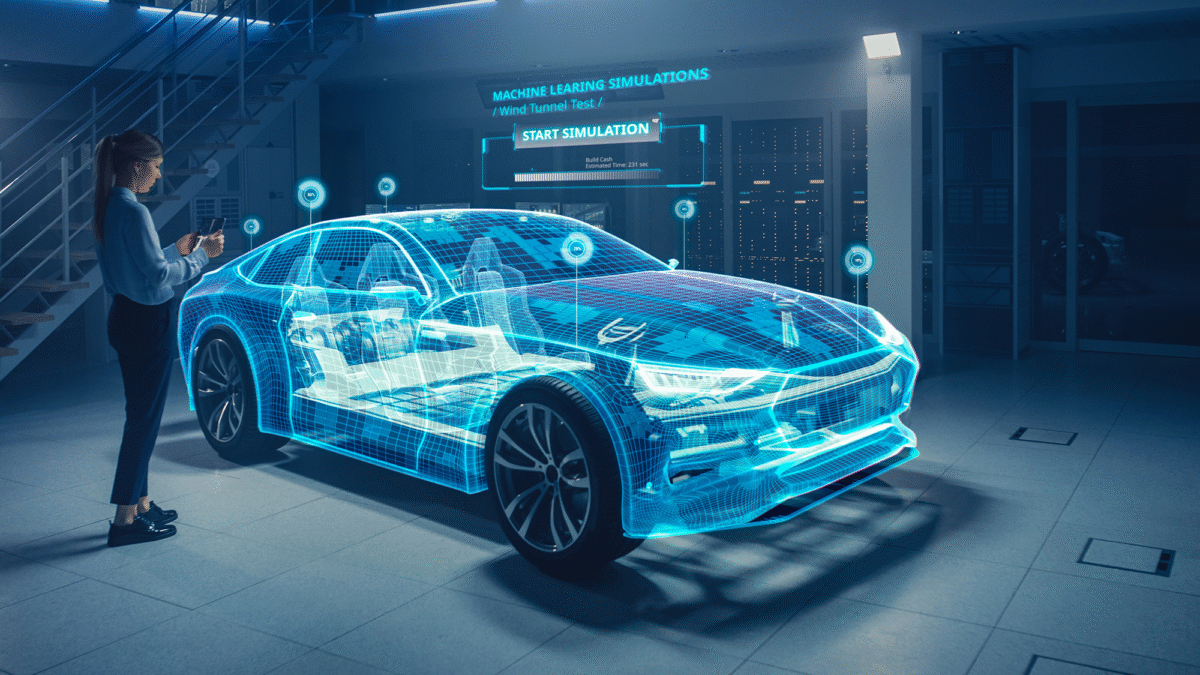
The automotive world is changing faster than ever before. Vehicle design engineering has entered a new era where technology, sustainability, and innovation come together to create smarter, safer, and more efficient vehicles. From electric powertrains to AI-driven simulations and lightweight materials, engineers are redefining how cars are built and how they perform on the road.
In this article, we’ll explore the modern trends in vehicle design engineering that are shaping the future of transportation, making cars more connected, efficient, and environmentally friendly.
Understanding Vehicle Design Engineering
Vehicle design engineering is a multidisciplinary field that blends mechanical, electrical, software, and industrial engineering to design vehicles that meet performance, safety, and aesthetic standards. Engineers today use cutting-edge technologies like computer-aided design (CAD), finite element analysis (FEA), and machine learning to develop advanced vehicles that meet modern consumer and regulatory demands.
Modern vehicle design no longer focuses solely on horsepower and speed — it emphasizes efficiency, safety, sustainability, and connectivity. These priorities are reflected in the latest design trends across the automotive industry.
1. Electrification and Sustainable Engineering
The global shift toward sustainability has dramatically impacted vehicle design. Electric vehicles (EVs) are now at the center of automotive innovation. Unlike traditional vehicles, EVs require entirely different design approaches. Engineers must account for:
- Battery placement and cooling systems: Batteries need efficient thermal management and safe integration into the chassis.
- Lightweight materials: To extend driving range, automakers use materials like carbon fiber, aluminum, and magnesium alloys.
- Aerodynamic design: Every curve matters in reducing drag and improving efficiency.
In addition to electric propulsion, manufacturers are also exploring hydrogen fuel cells and hybrid powertrains to reduce carbon emissions further.
Example: Tesla, Rivian, and Lucid Motors have set new standards in EV design by combining high performance with sleek, futuristic aesthetics.
2. Advanced Aerodynamics
Modern vehicles are designed to “slice” through the air more efficiently than ever. Aerodynamics plays a key role in enhancing fuel efficiency, stability, and performance.
Engineers now use wind tunnel testing and computational fluid dynamics (CFD) simulations to refine every surface and angle of a car’s body. Even small design elements, like the shape of door handles, wheel arches, or side mirrors, can significantly affect drag.
Active aerodynamics is another growing trend. These systems automatically adjust vehicle components — like spoilers or air vents — to optimize airflow and performance in real-time.
Example: Supercars such as the Bugatti Chiron and even electric vehicles like the Mercedes EQS use active aerodynamic systems for better efficiency and handling.
3. Integration of Artificial Intelligence (AI) in Design
Artificial intelligence is revolutionizing how vehicles are designed and tested. Through AI-driven modeling and predictive analysis, engineers can simulate performance, identify design flaws, and optimize parts long before a prototype is built.
AI tools also help in generative design, where algorithms automatically create multiple design alternatives based on specific performance criteria. This allows engineers to explore innovative shapes and structures that a human designer might never consider.
Benefits of AI in vehicle design include:
- Faster development cycles
- Reduced production costs
- Improved precision and reliability
- Enhanced user experience through data-driven design
Example: Major automakers like BMW and Ford use AI to analyze driver behavior, road conditions, and design feedback to continuously improve vehicle ergonomics and safety.
4. Smart and Connected Vehicle Systems
The rise of the Internet of Things (IoT) and 5G connectivity has transformed how vehicles interact with their environment. Modern vehicle design engineering now includes integration of smart sensors, real-time data systems, and autonomous driving technologies.
Connected vehicles can now communicate with infrastructure, other vehicles, and even pedestrians to enhance safety and efficiency. Engineers are focusing on:
- Vehicle-to-everything (V2X) communication
- Real-time diagnostics and remote updates
- Enhanced infotainment systems with voice and gesture control
- Augmented reality (AR) dashboards for better driver awareness
This connectivity also impacts interior design — vehicles are becoming digital ecosystems on wheels, offering a blend of comfort, entertainment, and intelligent assistance.
Example: Tesla’s over-the-air software updates and Apple CarPlay/Android Auto integration are leading examples of smart connectivity in modern vehicles.
5. Lightweight Materials and Structural Innovation
Reducing vehicle weight remains a top priority for improving performance and energy efficiency. Engineers are moving away from traditional steel bodies to lightweight materials without compromising safety or strength.
Common lightweight materials in modern vehicle design include:
| Material | Key Benefit | Common Application |
| Aluminum | Lightweight and corrosion-resistant | Body panels, chassis |
| Carbon fiber | High strength-to-weight ratio | Sports cars, EVs |
| Magnesium alloys | Extremely light, good rigidity | Engine blocks, wheels |
| High-strength steel | Enhanced crash resistance | Passenger compartments |
Beyond materials, engineers are experimenting with modular vehicle platforms, allowing flexibility in design and easier integration of different powertrains — electric, hybrid, or fuel-cell — into the same architecture.
6. Virtual Reality (VR) and Augmented Reality (AR) in Design
Vehicle designers now use virtual reality and augmented reality to visualize and test designs in immersive 3D environments. This technology helps engineers and designers:
- Conduct virtual walkthroughs of vehicle interiors
- Analyze ergonomics and user comfort
- Detect design flaws early
- Simulate real-world driving scenarios
VR and AR not only speed up the design process but also reduce costs by minimizing the need for physical prototypes.
Example: Automotive giants like Ford and Jaguar Land Rover use VR for collaborative design sessions and real-time design modifications before any physical model is made.
7. Human-Centered and Aesthetic Design
Modern vehicle design isn’t just about performance; it’s also about how a vehicle makes you feel. Aesthetic design trends now focus on user experience (UX) — the comfort, accessibility, and emotional connection between driver and machine.
Engineers are paying close attention to:
- Ergonomically optimized interiors
- Sustainable materials, like vegan leather or recycled plastics
- Customizable lighting and ambient environments
- Minimalistic dashboards and touch controls
With the growing demand for personalization, automakers now offer customizable color schemes, interior layouts, and digital instrument clusters.
8. Focus on Safety and Autonomous Design
Safety remains at the heart of vehicle engineering. Modern vehicles feature advanced systems like:
- ADAS (Advanced Driver Assistance Systems) — automatic braking, lane keeping, adaptive cruise control
- 360° camera systems for full visibility
- LiDAR and radar sensors for autonomous navigation
- Crash simulations and smart airbag deployment
Designing vehicles for autonomous driving adds a new dimension — engineers must now think beyond mechanical safety to include AI reliability and data security.
Conclusion
The field of vehicle design engineering is undergoing a revolutionary transformation. As technology evolves, vehicles are becoming smarter, cleaner, safer, and more connected. Engineers are blending creativity with advanced technology to craft vehicles that don’t just move people — they move the world forward.
From electrification and AI integration to lightweight materials and human-centered interiors, the future of vehicle design engineering promises a new era of innovation, sustainability, and intelligence on the road.
FAQs About Modern Trends in Vehicle Design Engineering
1. What is the biggest trend in modern vehicle design today?
The biggest trend is electrification — the shift from traditional internal combustion engines to electric and hybrid powertrains.
2. How does AI help in vehicle design engineering?
AI helps engineers predict performance, optimize materials, simulate safety scenarios, and create efficient, innovative designs faster than traditional methods.
3. Why is aerodynamics important in vehicle design?
Aerodynamics reduces air resistance, improves fuel efficiency, enhances speed, and increases overall vehicle stability.
4. What materials are commonly used to make vehicles lighter?
Modern vehicles use aluminum, carbon fiber, magnesium alloys, and high-strength steel to reduce weight without compromising safety.
5. How does virtual reality improve the vehicle design process?
VR allows designers to visualize vehicles in 3D, test ergonomics, and detect issues before physical prototypes are built, saving time and cost.