Latest Innovations in Vehicle Manufacturing
November 4, 2025
Best Aftermarket Parts for Performance Cars – Boost Speed, Style, and Power
November 4, 2025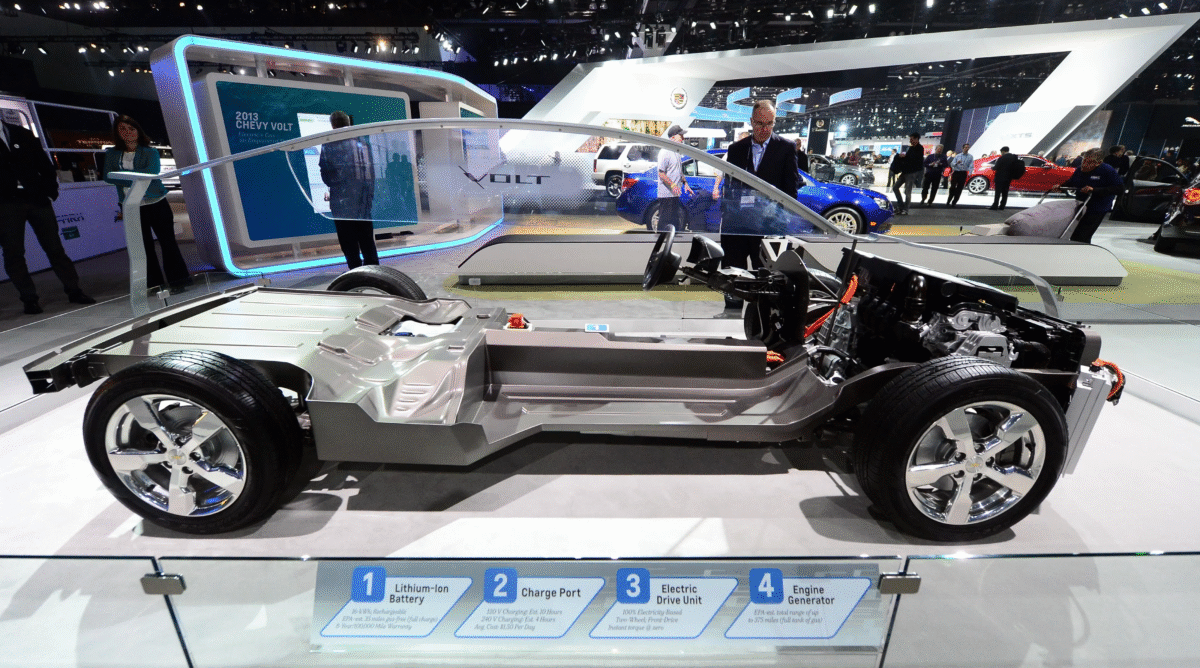
Electric vehicles (EVs) are transforming the global automotive industry. They are cleaner, quieter, and more efficient than traditional gasoline-powered cars. But have you ever wondered how electric vehicles are made? From the design stage to final testing, manufacturing an EV is a complex process that blends innovation, technology, and sustainability.
In this article, we’ll take a closer look at how electric vehicles are made, explaining every stage in a simple, human-friendly way — from raw materials and battery production to assembly lines and quality checks.
1. The Concept and Design Stage
Every electric vehicle starts with an idea. In this phase, engineers and designers work together to visualize the car’s purpose, size, and performance goals.
Key Steps in Design:
- Market Research: Manufacturers analyze customer needs, range expectations, and price points.
- Computer-Aided Design (CAD): Engineers use digital tools to model the EV’s shape, aerodynamics, and internal layout.
- Prototyping: A life-sized model is built for testing airflow, comfort, and aesthetics.
Unlike traditional cars, EV designs must account for battery placement, motor configuration, and weight distribution. The battery pack often sits under the floor to lower the center of gravity, improving stability and handling.
2. Sourcing Raw Materials
Once the design is approved, manufacturers need to source the right materials. EVs require both traditional automotive materials (like steel, aluminum, and glass) and specialized components used for batteries and motors.
Key Materials Used:
- Lithium, Cobalt, and Nickel: These are essential for battery cells.
- Copper: Used for wiring and the electric motor.
- Aluminum and Carbon Fiber: Lightweight materials that improve efficiency.
Automakers are now focusing on sustainable sourcing — ensuring that mining and manufacturing processes are environmentally responsible.
| Material | Primary Use | Sustainability Focus |
| Lithium | Battery cells | Recycling programs |
| Aluminum | Body panels, chassis | Lightweight design reduces emissions |
| Copper | Electric wiring, motor | Efficient energy transfer |
| Carbon fiber | High-end EV bodies | Recyclable composite use |
3. Building the Battery Pack
The battery pack is the heart of every electric vehicle. It stores the energy that powers the motor.
How Batteries Are Made:
- Cell Manufacturing: Individual cells are made using layers of cathodes, anodes, and electrolytes.
- Module Assembly: Dozens of cells are grouped into modules.
- Battery Pack Integration: Modules are combined into a single large pack with cooling systems and sensors.
Most EVs use lithium-ion batteries because they offer a good balance between energy density and safety. Advanced EVs also include Battery Management Systems (BMS) that monitor temperature, voltage, and charge levels to prevent overheating or overcharging.
4. Electric Motor Production
Instead of engines, electric vehicles rely on electric motors to move the wheels.
There are two main types of motors:
- Permanent Magnet Motors (PMM): Common for high efficiency and strong torque.
- Induction Motors (IM): Durable and cost-effective, used in some Tesla models.
How Motors Are Built:
- Copper windings are wrapped around a core.
- A rotor and stator are assembled to create magnetic fields that generate motion.
- Finally, the motor is tested for performance, efficiency, and noise levels.
5. Chassis and Body Manufacturing
The chassis is the EV’s backbone — it holds everything together, from the battery to the suspension system.
Chassis Production Steps:
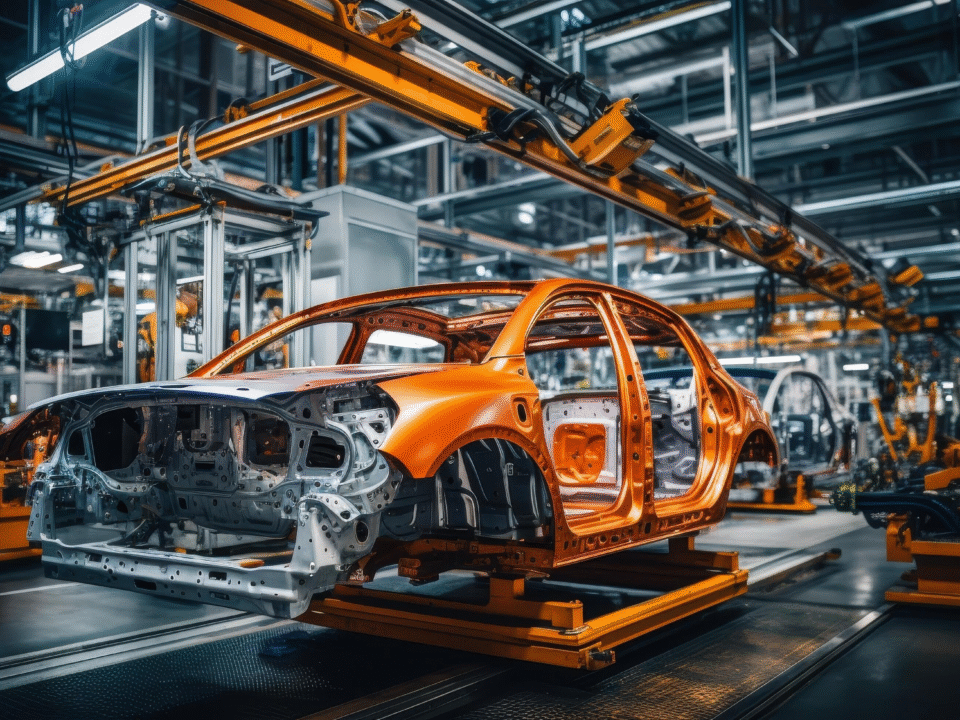
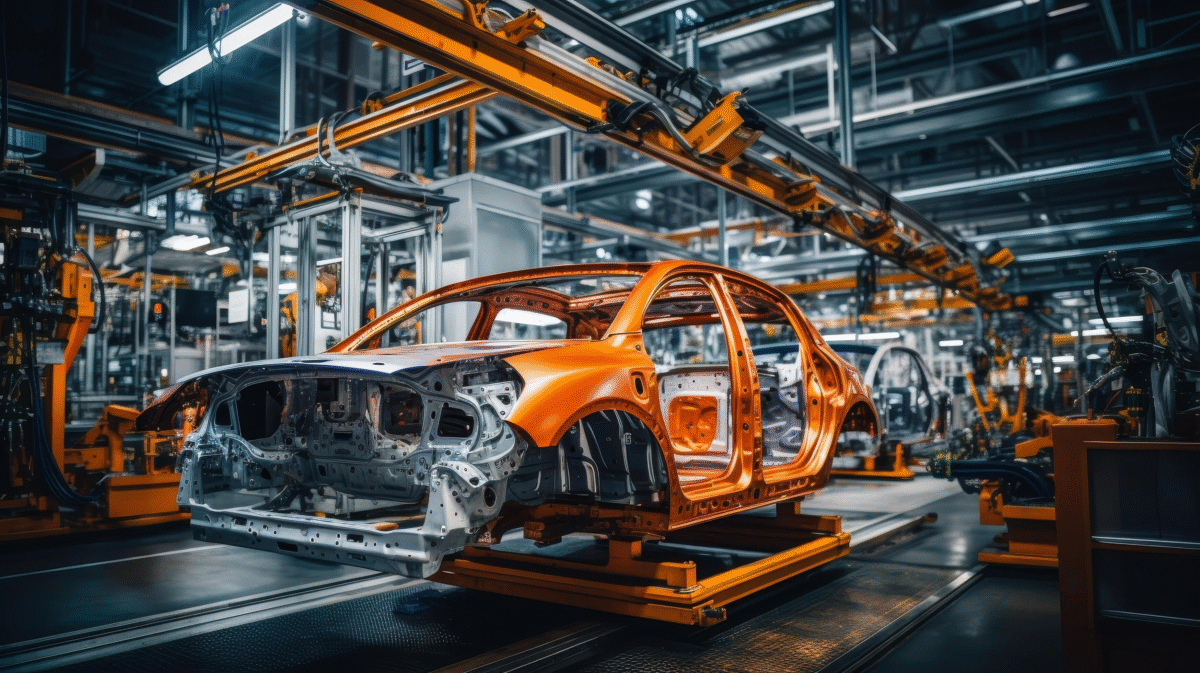
- Stamping: Large steel or aluminum sheets are stamped into shape using heavy presses.
- Welding: Robots weld the pieces into a solid frame.
- Painting: The body is cleaned, primed, and coated with paint for durability and shine.
Modern EVs often use modular platforms that allow manufacturers to build different models using the same base structure, saving time and cost.
6. Installing the Powertrain and Components
The powertrain of an EV includes the battery pack, motor, inverter, and transmission (if applicable).
Assembly Process:
- The battery pack is installed at the bottom of the chassis.
- The motor and inverter are mounted and connected to the drivetrain.
- Cooling systems, charging ports, and electronic controllers are added.
Since EVs have fewer moving parts than gasoline cars, assembly is simpler — meaning fewer components that can wear out or fail.
7. Interior Installation
The inside of an electric vehicle combines comfort, technology, and safety.
Interior Assembly Includes:
- Dashboard installation with digital displays.
- Seats, steering wheel, and controls.
- Infotainment and software systems integration.
Most EVs also feature advanced infotainment systems with touchscreen controls, navigation, and connectivity features like voice assistants and app integration.
8. Software Programming and Calibration
EVs are often described as “computers on wheels.” Software controls nearly every aspect — from motor performance to climate control.
Software Tasks Include:
- Battery management system programming
- Autonomous driving features calibration
- Energy efficiency optimization
Manufacturers regularly update software even after delivery, providing improved performance and safety through over-the-air (OTA) updates.
9. Testing and Quality Control
Before an EV hits the road, it undergoes rigorous testing to ensure safety and reliability.
Common Tests:
- Crash tests: To check structural safety.
- Range testing: To confirm battery capacity and real-world performance.
- Weather tests: To ensure operation under extreme conditions.
Robotics and human inspectors work together to verify that every detail — from battery safety to tire alignment — meets strict quality standards.
10. Final Assembly and Delivery
Once all tests are complete, the EV moves to final assembly, where finishing touches like logos, lights, and trim pieces are added.
After passing inspection, the car is charged, cleaned, and sent to dealerships or directly to customers. Some manufacturers even allow factory delivery experiences, where buyers can see where their EV was made.
11. Sustainability in EV Manufacturing
Sustainability is at the core of EV production. Many automakers are adopting green manufacturing practices such as:
- Using renewable energy in factories.
- Recycling batteries and materials.
- Implementing closed-loop systems to reduce waste.
Companies like Tesla, Rivian, and BYD are leading the way by creating eco-friendly production plants that minimize emissions and water use.
| Sustainability Practice | Benefit |
| Solar-powered factories | Reduces carbon footprint |
| Battery recycling | Cuts resource waste |
| Lightweight materials | Improves vehicle efficiency |
| Closed-loop water systems | Minimizes environmental impact |
Conclusion
The process of how electric vehicles are made is a fascinating journey from concept to completion. Every step — from mining raw materials to installing advanced software — reflects the evolution of automotive technology.
Electric vehicle manufacturing combines precision engineering, innovation, and sustainability, setting the stage for a cleaner and smarter future of transportation.
As technology advances, EV production will continue to become faster, greener, and more affordable — making electric cars accessible to everyone.
FAQs About How Electric Vehicles Are Made
1. What is the most expensive part of an electric vehicle to manufacture?
The battery pack is typically the most expensive component, accounting for 30–40% of the total production cost.
2. How long does it take to build an electric car?
It usually takes around 15–20 hours of factory time to assemble an EV, depending on the model and manufacturer.
3. Are electric vehicles fully made by robots?
No, while robots handle welding and assembly, human workers still perform quality checks, software calibration, and final inspections.
4. What happens to old EV batteries?
Old batteries can be recycled or reused in energy storage systems to reduce waste and environmental impact.
5. Do electric cars require the same safety tests as gas cars?
Yes, EVs undergo the same (and sometimes even more rigorous) safety and crash tests to meet global standards before they’re sold.